Gifts
How to Build a Tea Gift Basket for a Housewarming or Get-Well Gift
A tea gift basket earns its place because it is useful on the first day and the tenth. Someone moving into a new place has boxes everywhere and no idea which carton holds the kettle. Someone recovering from surgery wants something warm that requires no decisions. Build the basket around one person's habits and one clear number, and it stops looking like a random assortment and starts looking deliberate.
Start With the Recipient, Not the Basket
Before you buy anything, answer three questions: What do they drink now? How much shelf space do they have? What will they actually use in the next two weeks?
- The everyday black-tea drinker: a sturdy 16-20 oz pot and a familiar loose-leaf Assam or English breakfast blend. Skip the delicate white tea.
- The cafe matcha person: a small whisk, a wide bowl, and a tin of matcha they can't buy at the supermarket.
- The new homeowner with a thin kitchen: cups and a kettle matter more than a second teapot.
- The get-well recipient: caffeine-free blends, nothing heavy to lift, and no honey if they are managing blood sugar or following dietary guidance. If you are unsure, ask a family member rather than guessing.
A get-well basket should be light enough to carry one-handed from a car. A housewarming basket can have weight to it; weight reads as generosity.
Set a Budget Before You Shop
Decide on a number and give roughly half of it to the teapot, since that's the piece people keep. In a modest budget, the pot takes the biggest share and the tea fills in around it. At a higher budget, spend on craft rather than quantity: a hand-thrown pot, single-origin leaves, a jar of real honey, two good cups. Past that, more items stop adding pleasure and start adding clutter.
Two things quietly drain a budget: shipping on three separate orders, and packaging bought as an afterthought. Order from one seller when you can, and buy tea from a local shop if your town has one — you'll get better advice and no postage.
The Teapot Is the Centerpiece
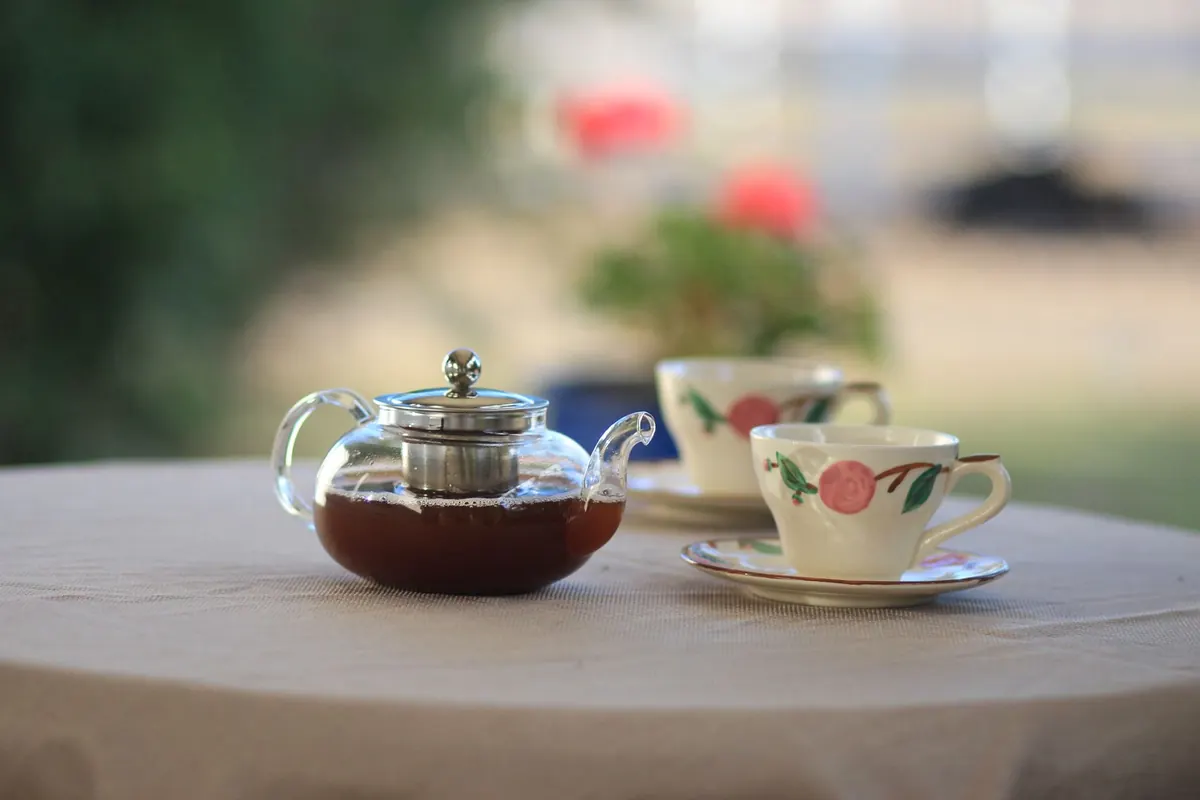
Match the pot to how they brew. A ceramic pot with a stainless infuser suits one or two people drinking the same tea and keeps heat well. A glass pot lets a new tea drinker watch the leaves open and is easy to clean. Cast iron holds heat beautifully but is heavy and fussy — lovely for slow evenings, wrong for a get-well gift.
Avoid handles that get too hot to hold, spouts that dribble, and lids that lift out of place when you pour. If you're in a shop, test all three. Online, look for photos of the lid seated and read reviews that mention pouring.
If they already own a good teapot
Buy around it instead: a wide infuser basket that fits a mug, a small kettle with temperature settings, a tin that actually seals, a tea towel. These get used daily, which is more than most gifts manage.
Choosing the Tea
Two small tins beat one large one. A basket with a choice feels generous; a basket with a quarter-kilo of something they don't like is a chore. If you don't know their taste, cover two bases:
- Black: Assam for malty and brisk, Ceylon for lighter and cleaner. Both take milk well.
- Green: sencha or dragon well, brewed cooler so it doesn't turn bitter.
- Oolong: the middle ground for anyone who finds green tea grassy and black tea heavy.
- Herbal: peppermint, chamomile, rooibos, or lemon and ginger — caffeine-free, which matters for evening drinkers.
Write the brewing temperature and steeping time on a small card. It is the most useful thing in the basket and costs nothing.
Honey, Cups, and the Small Extras
Honey is the natural partner to tea, and it's your chance to buy something better than a plastic bear. Look for raw, unfiltered honey from a regional producer; local varieties often carry the flavor of whatever is blooming nearby. A jar with a dipper or a wooden spoon is easier to use than a squeeze bottle. Leave honey out entirely if the recipient is managing blood sugar or following dietary advice — a caffeine-free herbal blend covers that gap well.
For cups, choose two matched mugs in a size they'll actually fill, with a comfortable handle and no narrow rim. Thick walls hold heat longer. Keep the palette simple: two or three colors and one texture running through the whole basket.
Small items that make the basket feel finished:
- A mesh strainer or a small jar for used leaves.
- A plain shortbread or butter biscuit that won't scent the tea.
- A linen or cotton tea towel in a color that suits their kitchen.
- A handwritten card listing what's inside and why you chose it.
Packaging That Travels Well
Line a sturdy box or a shallow basket with tissue or a folded towel. Put the heaviest pieces — teapot, honey jar — low and centered, then build outward with tea and cups. Fill the gaps with crumpled tissue so nothing shifts. Wrap the teapot in the tea towel instead of bubble wrap; it's padding and a gift at once.
Before the lid goes on, check that the honey is upright and sealed inside a bag, that nothing rattles when you shake it gently, and that the card sits on top where it will be seen first. If you're delivering to a hospital, confirm what the ward allows before you arrive — many restrict food and flowers, and a phone call saves a wasted trip.
The Last Five Minutes
Write the card by hand and name the person, not the occasion: "For the tea you drink at 6 a.m. before anyone else is awake." Add the brewing notes for each tin, and say whether the pot is dishwasher safe — usually it isn't. That short paragraph is what separates a basket that gets unpacked from one that gets used every morning.
Photo: Sergey Meshkov / Pexels
Related Articles