Tea Sets
How to Host an Afternoon Tea Party: Setup, Timing, and Essential Teaware
Afternoon tea works best when it feels like a small ceremony rather than a catering job. The trick is deciding in advance what happens at 3:30, what happens at 4:15, and who is doing the pouring. Everything else — the china, the sandwiches, the second pot of Assam — is detail you can arrange beforehand and then forget about while your guests are actually there. Here is a hosting plan you can run once and reuse.
Set the Table Before You Think About the Food
Give each guest about 24 inches of table edge. If your dining table is small, split the party across two tables or set up a buffet for the food and keep the tea things on a side table. Cramped seating ruins a tea faster than a mediocre scone.
Iron the cloth or shake out a runner, then build each place setting: side plate to the left of the cup, fork to the left of the plate, small spoon to the right. Keep the centerpiece low enough that people can see across it — a short vase of blooms or a single candle beats a tall arrangement every time.
Decide whether you're serving seated or standing before you set anything down. Seated tea means the stand lives on the table; standing tea means it lives on a sideboard with a stack of plates and people help themselves. Both work. Mixing the two without a plan does not.
The Essential Teaware Kit
You don't need a matched service for twelve. You need enough of the right pieces that nothing stalls mid-pour.
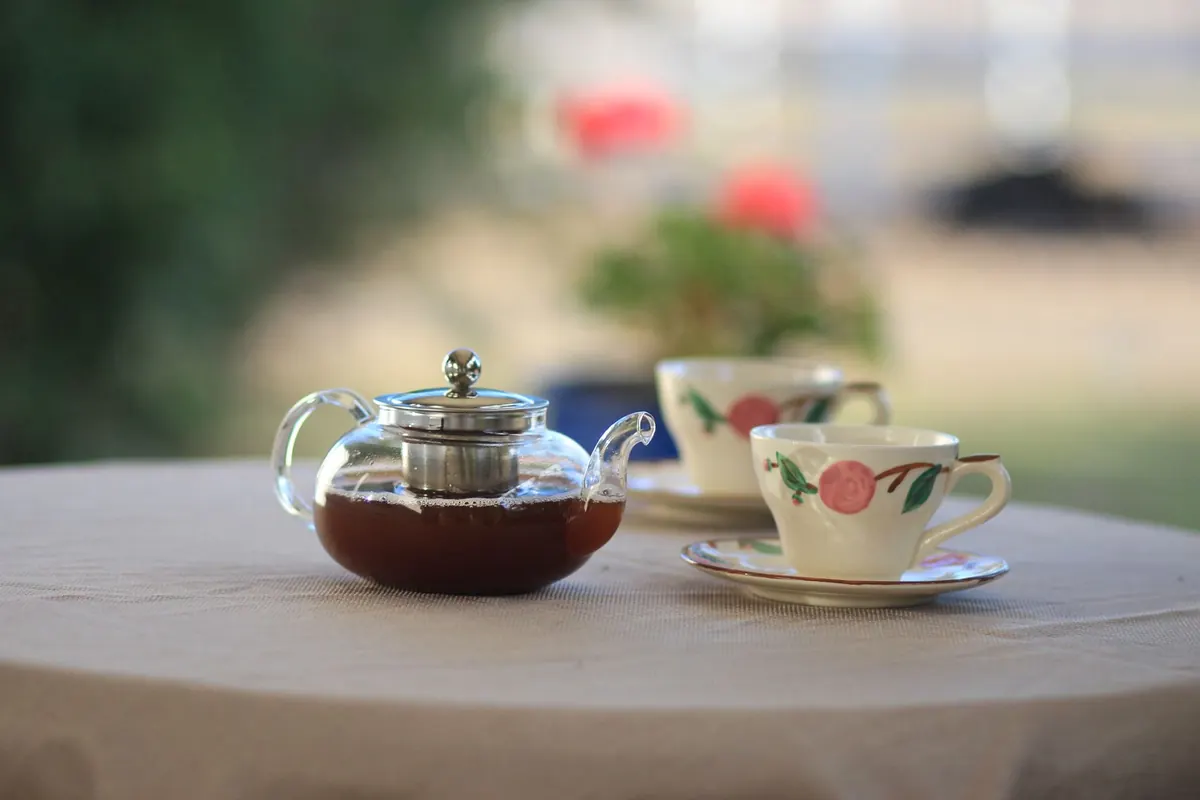
- A 4–6 cup teapot for the main blend, plus a small 2-cup pot for a second tea such as green, oolong, or decaf.
- One cup and saucer per guest, plus one spare. Mismatched sets are charming; inconsistent cup sizes are not.
- A fine-mesh strainer if you brew loose leaf, and a small bowl to park spent infuser baskets.
- A milk jug, a sugar bowl with tongs, and a small plate for lemon slices.
- A kettle you can keep off the table but within arm's reach, or a thermos of just-boiled water.
- A three-tier stand if you own one; otherwise two plates, savories on one and sweets on the other.
- Serving pieces: butter knife, jam spoon, cream spoon, and a fork for each shared plate.
- Napkins and side plates, because guests will move food from the stand to their own place.
- A dump bowl or small pitcher for pouring off the weak last inch of a pot.
The Menu Clock: Timing a 3:30 Start
Afternoon tea is a progression, not a single course. Work backwards from the arrival time and you'll avoid the two classic failures: cold scones and a host who never sits down.
- An hour before. Set the table. Make sandwiches, wrap them in a damp towel, and refrigerate. Fill the kettle.
- Thirty minutes before. Warm scones in the oven. Take butter, jam, and cream out so they lose their chill. Arrange savories on the bottom tier.
- Ten minutes before. Boil water. Swirl a splash of it in each teapot, then empty — a warm pot holds temperature far better than a cold one.
- Arrival. Offer something cold to drink, then brew the first pot while guests settle and choose seats. Keep the first course light and easy to eat standing up if people are still finding their places.
- First pot and savories, roughly 20–30 minutes. Sandwiches, small tarts, a savory bite or two. This is when you catch up, not when you refill.
- Second pot and scones, roughly 20 minutes. Scones come to the table warm, with cream and jam within reach. Brew a different tea here if you like — a lighter one after a brisk breakfast blend.
- Third pot and sweets, roughly 20–30 minutes. Cakes, shortbread, chocolates. Small portions, because most people are full by now.
- Wind down. Leave water in the kettle, keep one pot going for anyone who wants more, and let people drift.
Teapot Rotation: Keep the Second Pot as Good as the First
The pot is where most tea parties quietly go wrong. Leaves left sitting in water turn bitter, and a third cup tastes nothing like the first.
Use roughly one heaping teaspoon of loose leaf per cup, plus one for the pot. Black teas want water just off the boil; green teas want it cooler, around 170–180°F, or they turn sharp. Steep black tea three to five minutes, green tea two to three. Then either pour the pot out fully or lift out the infuser basket.
Never top up a half-empty pot with fresh hot water and put it back on the table. You'll be serving a tired second infusion to whoever gets the last cup. Instead, brew a fresh pot. Empty the old leaves into the compost, give the pot a quick rinse with hot water, and start again. Between a brisk black and a delicate green, rinse thoroughly — a trace of smoky Assam will follow you into the next pot otherwise.
Assign one person to pour, or pour the first round yourself and set the pot within reach of someone reliable. A pot that circles the table untouched for ten minutes is a pot of stewed tea.
Cup Placement and the Small Details Guests Notice
Set the cup centered on its saucer with the handle at about four o'clock for a right-handed guest, eight o'clock for a left-handed one — the handle should fall naturally under the hand. The spoon rests on the saucer behind the cup, never standing in it. Keep the saucer an inch back from the table edge so nobody knocks it reaching for the jam.
Milk and sugar go on the table, not pre-poured. Offer milk on the side; lemon goes in a small dish with a fork or small tongs, not floating loose. If you're serving a delicate tea, pour it and let guests add milk — pouring boiling liquid directly onto cold milk in thin porcelain is a risk nobody needs.
Cleanup While It's Still Warm
Rinse every cup, saucer, and pot within an hour of the last guest leaving. Tea tannins bond to glaze as they dry, and a stack left overnight is a stack you'll be scrubbing tomorrow.
Hand-wash anything with a gilded rim, hand-painted decoration, or antique provenance — dishwashers strip gold and cloud fine glaze. Unglazed clay pots get hot water only, no soap, and dry upside down with the lid off so nothing goes musty. For stubborn interior stains on a glazed pot, a paste of baking soda and water with a soft cloth works; skip abrasive powders and steel wool.
Empty the leaves, rinse the strainer, and dry the stand before it goes back on the shelf. Twenty minutes of tidying while the kettle cools saves an hour later.
Make It Repeatable
Pick a formula and keep it: one blend for the first pot, one scone, one sweet, and a fixed start time. Write down what you served and what ran out first, and next time you'll know to make more sandwiches and fewer cakes. Afternoon tea rewards repetition. The second time you host, you'll spend the hour before guests arrive doing very little — which is exactly the point.
Photo: Pixabay / Pexels
Related Articles